Password Security
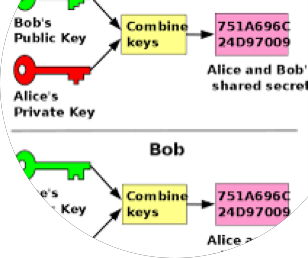
•Passwords, haphazardly written on sticky notes or intercepted in transit gave rise to the field of security engineering. In the early 1970's the algorithms for public key cryptography were invented by British Intelligence, to solve the need to exchange permission/identity/authorization and access to information rapidly, but ironically was kept secret. However the method was re-invented in 1976 by Whitfield Diffie and Martin Hellman as a means to encrypt communication over insecure channels without prior exchange of keys (split public/private key method). This was later known as the Diffie-Hellman key exchange. Prior to this, encoding and key exchange had to be established in advance which was not only time consuming but usually involved traversing great distances for machine calibration and redo/change of keys regularly. This work allowed passwords to be used as the gatekeeper in encrypted communication and near realtime decryption.
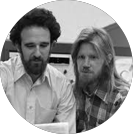
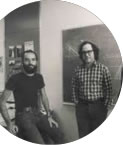
•In 1978 Ronald Rivest, Adi Shamir, and Leonard Adleman, filed the MIT patent and applied this method for public key cryptography as it would be relevant to the emerging Internet. The publications during this time introduced asymmetric key cyphers (sometimes termed public-key cyphers). These are algorithms which use two mathematically related keys for encryption of the same message. Some of these algorithms permit publication of one of the keys, due to it being extremely difficult to determine, the other key simply from knowledge of the other.
[24]The work was described that year using Bob and Alice (personae of the A and B in the equations). In 1984 during a speech in Zurich, Alice and Bob took on personalities (story identities) first as poker players by phone and then as stockbroker/speculator to help the audience understand the math. Early systems modeling in the late 1980's enforced password best practices related to public key techniques. Academic teaching regularly featured Alice and Bob as the identity security actors in key exchange.
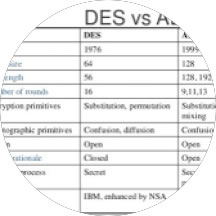
•In Germany, Singapore, Czech Republic and Spain government smart cards were issued to aid in two factor identification, increasing exponentially potential Bob and Alice identities. By 1989 the DES (Data Encryption standard) was invented by the National Bureau of Standards to ensure any Bob and Alice passwords were effectively secure (not easily guessed or brute forced hacked).
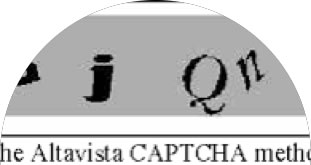
• By 1998, the Electronic Freedom Foundation broke DES keys in 56 hours using dictionary attacks, opening up an opportunity for AES, developed the year prior, forecasted at the time to take 2 to the 55th power years to crack with dictionary techniques. AltaVista around the same time created a random image called CAPTCHA to serve as another means of asserting presence or agency because bots were increasingly gaming logon applications (Ticketmaster and other first-call systems were owned by scalpers as soon as the computer systems went live; an extension of the hack/race started with telephone preaking). By 2001, Greenwich Technology Partners (personal communication, Waltham MA 2000) came out with its RSA Security Architecture book outlining what Siteminder and a few other vendors were trying to do; suggesting the future would be better than just Kerberos with some sort of Cloud directory
.