Assertion of Identity
Skipping over the medieval cryptoanalytic advances that further differentiated steganography from cryptography, significant advances in communication and identity assertion were made by the mid-1800s. Relevant to identity and access management, an assertion of affiliation (friend/foe) must be validated. At higher community levels, government authorities began to assert systematic identity.
By 1414, Henry V required passports for travel. The Babinton plot (Queen Elizabeth 1) a decoded message led to the execution of Mary Queen of Scots. Later execution of Mata Hari and Dreyfus were betrayals and misuse of code-breaking to assert identities that were, in fact, absent. 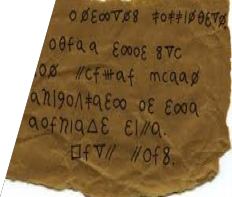
in 1829 Prime Minister Robert Peel introduced reforms linking personally identifiable information (PII) to unique numbers (UK). In the Netherlands a personal number system (predecessor of the SSN) was created in 1849.
Abraham Lincoln and West Point graduates in the Civil War organized the signaling corps to communicate between Northern army locations using flags and code to direct troop movements. The codes were signed with internal ciphers transmitted in the clear. Communicating the encoded cipher right into the signal becomes relevant for large scale identity management. With this military communication strategy, the time to solve/resolve the cipher becomes critical and some advantage is given allies in decryption but none provided to adversaries to break that cypher in time. 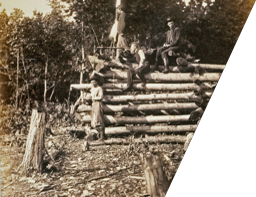
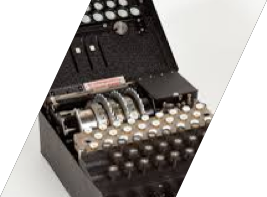
By the time British code breaking of German ciphers in World War I, and the decryption of the Zimmerman telegram en-route to Mexico that brought the US into the WWI; assertion of identity to 1) decode, 2) time to decrypt and 3) complexity of the encryption were all key factors embedded into systems. By WWII, the Enigma cipher machines, password and challenge responses or physical cricket code for one-time-use on D-Day, as well as the Japanese Navy (JN-25) decryptions of proxied identity turned the tide of the War.
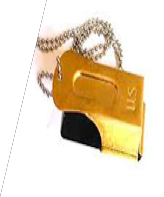
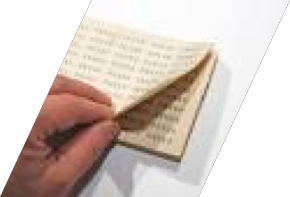
 In each of these examples, encrypted content with some assertion of valid identity (something known exclusively or physical) permitted decode and access/authentication for information access or permission. Following WWII, one-time pad ciphers during the Cold War, led the way to the algorithmic cryptography we recognize today. All of these methods also combine identity assertion with multiple factors to permit decryption.